
【CRS】Individual Income Tax on Offshore Trusts, transition grace period ends 22.10.2026
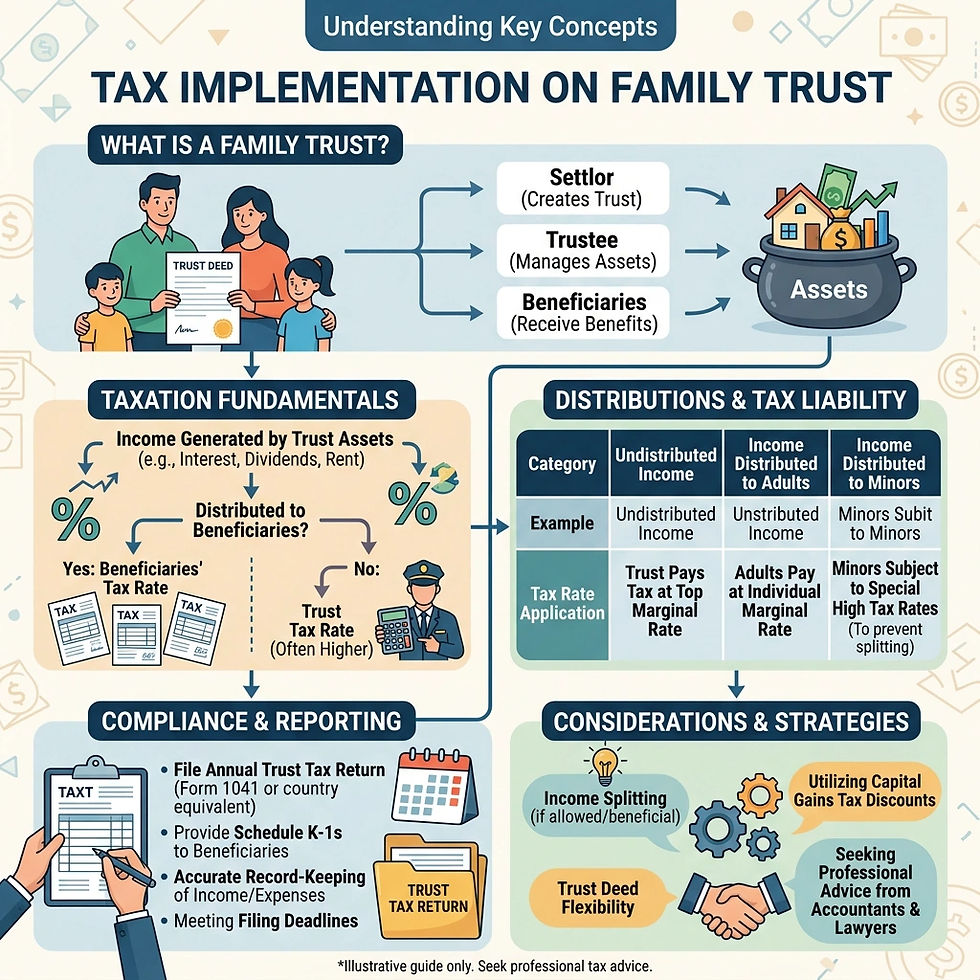
On 24 July 2026, the Ministry of Finance (MOF) and the State Taxation Administration (STA) jointly issued "the Announcement on Individual Income Tax Matters Relating to Offshore Trusts" (Announcement No. 21 of 2026).
Immediately after, the STA issued the Announcement of the State Taxation Administration on Administrative Matters Relating to the Individual Income Tax on Offshore Trusts (Announcement No. 15 of 2026).
These two announcements are to strengthen the administration of Individual Income Tax (IIT) on offshore trusts.
The MOF and the STA issued guidance clarifying individual income tax treatment for assets placed in offshore trusts. A 90‑day transitional declaration window (effective from the announcement date) allows resident individuals who transferred assets between 1 Jan 2023 and 31 Dec 2025 — and certain non-residents — to declare and pay unpaid individual income tax without late penalties.
Beijing tax authorities are prioritising enforcement ahead of the Oct 22, 2026 cutoff. If you advise clients with cross-border trust structures, review historic transfers and consider prompt voluntary disclosure.
On 29 and 30 September 2026, right before the Chinese National Day holiday, Beijing tax authorities issued four articles regarding the upcoming implementation.
Tiger Consulting Global Pty Limited draws your attention to the latest updates on the above, and we bring in a China tax alert article published on the Dentons Rodyk website (https://dentons.rodyk.com/en/insights/alerts/2026/july/30/china-tax-alert-new-individual-income-tax-regime-for-offshore-trusts) for your further reference on the background of the two Announcements as follows:
************************************
China tax alert: New Individual Income Tax regime for Offshore Trusts (MOF and STA Announcement No. 21 and STA Announcement No. 15, 2026)
A comprehensive analysis of and practical guide to new filing rules, tax jurisdictions, and compliance obligations for settlors, beneficiaries, and trustees
To strengthen the administration of Individual Income Tax (IIT) on offshore trusts and implement the Announcement on Individual Income Tax Matters Relating to Offshore Trusts (Announcement No. 21 of 2026) jointly issued by the Ministry of Finance (MOF) and the State Taxation Administration (STA), the STA has issued the Announcement of the State Taxation Administration on Administrative Matters Relating to the Individual Income Tax on Offshore Trusts (Announcement No. 15 of 2026) (the Announcements).
This alert provides a comprehensive analysis of the Announcements and offers a practical guide for PRC families and advisers from private banks, trustees, insurers and wealth managers.
Issued under the PRC Individual Income Tax Law, the PRC Law on the Administration of Tax Collection and their implementing regulations, the Announcements establish the administrative framework for the taxation of offshore trusts, including reporting and compliance requirements. It took effect upon issuance but importantly, it also applies to existing offshore trusts established before 24 July 2026. Settlors of trusts established before the Announcement must, upon their first filing under the new regime, submit the Offshore Trust Individual Income Tax Annual Reporting Form for both the trust establishment year and the 2025 tax year, together with the trust's historical financial statements.
Comprehensive tax obligations for settlors and beneficiaries
The Announcements set out the filing timelines, prescribed forms and supporting documents applicable to different parties at various stages of an offshore trust's lifecycle, depending on their tax residency and the relevant trust event.
Asset injection and ongoing annual tax obligations
Resident settlors: Must file and pay IIT on property transfer income from 1 March to 30 June of the year following the asset transfer. They must also file and pay IIT annually during the same period on the offshore trust's accumulated earnings for the preceding tax year, taxable as property transfer income and interest, dividends and bonuses. If two or more individuals transfer assets into the same offshore trust, they are required to file and pay tax separately based on their respective assets and allocations.
Non-resident settlors: Must file and pay IIT on China-sourced property transfer income within 15 days after the end of the month in which the asset transfer occurs. Required filings include the IIT Self-Declaration Form (Form A), the Offshore Trust IIT Tax Details Form, and the Offshore Trust IIT Annual Reporting Form.
If both resident and non-resident individuals transfer assets into the same offshore trust, the entire trust is treated as if the assets were entirely injected by resident individuals, and the resident individuals must declare and pay tax accordingly.
Resident beneficiaries: Where a non-resident settlor establishes an offshore trust for resident beneficiaries, the beneficiaries must file and pay IIT on distributions received between 1 March and 30 June of the following year. Required filings include Form B, the Offshore Trust IIT Tax Details Form, and supporting documents evidencing the distribution.
The Announcements provide a transitional compliance measure for historical offshore trust arrangements. Resident individuals who transferred assets into offshore trusts between 1 January 2023 and 31 December 2025, and non-resident individuals who transferred assets before the Announcement came into effect, may declare and pay any outstanding IIT within 90 days of the Announcements’ effective date without incurring late payment surcharges. This relief does not exempt the underlying tax liability but provides taxpayers with a limited opportunity to regularise their historical tax position.
Special lifecycle events: Termination, residency change, and death
The trust lifecycle triggers immediate tax obligations that require filing within 15 days of the month following the event:
Trust termination: For resident-settled trusts, the resident settlor must file and pay tax, submitting the Offshore Trust Liquidation IIT Return, the Offshore Trust Liquidation IIT Report, and trust operating, liquidation, and distribution data from 1 January of the termination year to the termination date. For non-resident-settled trusts, the resident beneficiary receiving the trust assets must file and pay tax, submitting the Offshore Trust Liquidation IIT Return and distribution support documentation.
Change of tax residency: If a resident settlor who injected trust assets becomes a non-resident, they must file within 15 days of the following month, submitting liquidation forms and trust operating and distribution records from 1 January of that year to the residency change date.
Death of the settlor: If a resident settlor dies and the trust is inherited by non-residents or has no inheritors, the trustee (or its designated domestic agent) must file and pay tax within 15 days of the following month, submitting liquidation forms and trust financial details from 1 January of that year to the date of death. If the trust is inherited by another resident individual, the inheriting resident must take over the ongoing tax obligations, submitting Form B, the Tax Details Form, the Annual Report Form, and trust inheritance, financial, and distribution information.
Summary table: Filing timelines and required documentation
Trustee / taxpayer event | Filing timeline | Income category | Key required forms & documents |
Resident settlor (Asset injection) | 1 March – 30 June of next year | Property transfer income | Form B, Tax Details Form, Annual Report, Trust Agreement, Asset List, Org Chart |
Resident settlor (Annual earnings) | 1 March – 30 June of next year | Interest, dividends, bonuses, property transfer | Form B, Tax Details Form, Annual Report, Trust Financials, Distribution Records |
Non-resident settlor (Asset injection) | Within 15 days of next month | Property transfer (China-sourced) | Form A, Tax Details Form, Annual Report, Trust Agreement, Asset List, Org Chart |
Resident beneficiary (Distribution) | 1 March – 30 June of next year | Distribution income | Form B, Tax Details Form, Distribution verification docs |
Trust termination (Resident settled) | Within 15 days of next month | Operating & liquidation income | Liquidation Return, Liquidation Report, Financials from Jan 1 to termination date |
Settlor tax residency change: resident to non-resident | Within 15 days of next month | Trust income up to the change date | Liquidation Return, Liquidation Report, Trust financial and distribution records |
Settlor death (Non-res/No inheritor) | Within 15 days of next month | Trust income up to death date | Liquidation Return, Liquidation Report, Trust financials (filed by Trustee/agent) |
The Announcements introduce several administrative safeguards to facilitate compliance. Resident settlors or trustees facing financial difficulty due to trust termination or the death of a resident settlor may apply to pay the resulting IIT in equal instalments over a period of up to five years, provided the prescribed record form is submitted before the filing deadline.
The Announcements also permit resident individuals to claim foreign tax credits for qualifying foreign taxes paid on offshore trust income upon submission of the required supporting documents. In addition, where asset values are not provided or are considered unreasonable, the tax authorities may determine the fair market value through an official valuation. Tax filings are currently made in person at local tax offices, with an online filing channel through the Natural Person Electronic Tax Bureau to be introduced in due course.
Mandatory obligations and liabilities for overseas trustees
The Announcements shift significant administrative responsibilities onto offshore trustees, establishing them as key stakeholders in China's offshore trust tax compliance landscape. Overseas trustees must recognize and prepare for the following statutory duties:
Accurate accounting by tax year: Trustees are legally required to accurately calculate and account for all income, management, and distributions generated by the offshore trust. Specifically, they must categorize and calculate 'interest, dividends, and bonuses' and 'property transfer income' on an annual tax-year basis.
Filing assistance: Trustees must actively assist resident and non-resident taxpayers in completing their Chinese tax declarations and compiling all necessary financial data and records.
Active tax filer status: In the event of a resident settlor's death where the trust is inherited by non-residents or has no heirs, the trustee (or its designated domestic agent) is the primary party responsible for filing and paying the tax within the 15-day deadline.
Translation and verification: Trustees and taxpayers must ensure that all foreign-language documents submitted are accompanied by complete, accurate Chinese translations, and they must fully cooperate if tax authorities request supplementary supporting documents.
Severe liability for non-compliance: Trustees and taxpayers are jointly responsible for the truthfulness, accuracy, and completeness of the declared data. If a trustee fails to provide materials or file taxes as required, or if an intermediary or agent violates tax laws resulting in underpaid tax, the tax authorities will impose penalties and legal sanctions in accordance with the PRC Law on the Administration of Tax Collection.
Practical guide: What families and advisers should do now
During the 90-day compliance period, PRC families should treat the window as a regularisation exercise, not as an invitation to make rushed structural decisions. We suggest these immediate steps:
Map the structure: identify settlors, deemed contributors, beneficiaries, protectors, trustees, underlying entities and related parties.
Confirm tax residence: review PRC tax residence, domicile and “primary economic interests” issues for each relevant individual.
Reconstruct asset history: list assets transferred, dates of transfer, original cost, market value at transfer and supporting valuation records.
Review income and benefits: capture trust income, underlying entity income, distributions, loans, guarantees, expense payments and use of trust property.
Check documentation: gather trust deeds, financial statements, organisation charts, asset lists, distribution records, liquidation records and Chinese translations.
Client triage: private banks, insurers and wealth managers should identify China-linked settlors, beneficiaries, controllers, trust assets and insurance wrappers.
Escalate higher-risk cases: prioritise structures with appreciated assets, pre-IPO wealth, mixed-residence families, large distributions or incomplete records.
Coordinate advisers: align trustees, PRC tax advisers, offshore counsel, banks, insurers and family offices before filings are made.
Assess liquidity: identify whether tax may arise without a cash realisation and whether instalment payment may be relevant.
Avoid one-size-fits-all solutions: insurance, restructuring, unwinding or migration should each be analysed on its own facts.
After the 90-day period, the focus should move from remediation to ongoing discipline. This is important to ensure ongoing tax compliance and long term management discipline:
Set an annual compliance calendar: assign responsibility for records, calculations, translations, filings and tax funding.
Review before key events: new asset injections, distributions, deemed benefits, death, migration, residence change, termination and succession transitions.
Upgrade trustee reporting: ensure trust accounts can produce PRC tax-category information, not only conventional trust accounts.
Refresh documents: review trust deeds, reporting covenants, indemnities, confidentiality terms and information-sharing protocols.
Integrate succession planning: consider wills, family governance, holding vehicles, insurance, shareholder arrangements and dispute prevention alongside the trust.
Concluding note
The Announcements are a reminder that offshore wealth planning is moving into an era of greater transparency, compliance and administrative vigilance. Offshore trusts remain useful tools for succession planning, asset holding, governance and family continuity, but they are not a substitute for proper tax analysis, documentary discipline and ongoing administration.
For PRC families and their advisers, the task now is to take stock, regularise where necessary, build reliable reporting systems, and ensure that future structures can withstand scrutiny not only when they are created, but throughout their life cycle. Trusts are only one instrument in the broader wealth management toolkit. The better approach is a holistic one: align tax compliance with succession planning, family governance, liquidity management, investment objectives and long-term stewardship of family wealth.
**************************
Disclaimer: This article is intended to provide general information only and does not constitute professional advice for specific circumstances. It should not be relied upon as a substitute for tailored advice.
![[ATO] ATO to stop accepting credit cards after 30 November 2026](https://static.wixstatic.com/media/c42589_24449e85130845bebe51f905dc4161d7~mv2.jpg/v1/fill/w_980,h_980,al_c,q_85,usm_0.66_1.00_0.01,enc_avif,quality_auto/c42589_24449e85130845bebe51f905dc4161d7~mv2.jpg)
Comments